



Clinical and infectious waste treatment
AREAS OF ACTIVITIES
ECODAS is an expert in the treatment and processing of waste generated from hospitals, clinics, other healthcare institutions, seaports, airports, slaughterhouses, and animal meat and food processing establishments. It also handles the shredding and the destruction of confidential documents and supports.
OUR CONCEPT
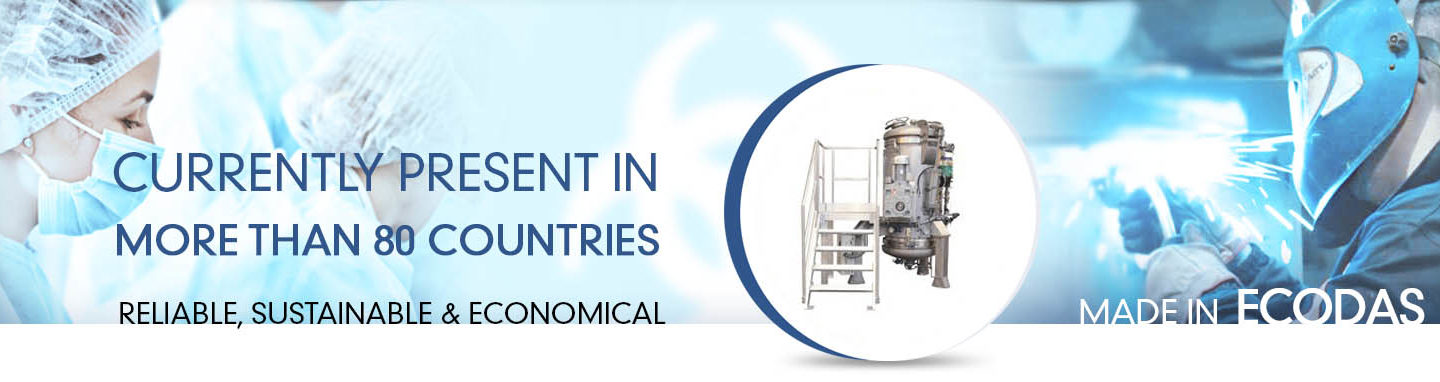
With its innovative concept, combining pre-shredding and steam sterilization in one (1) completely sealed vessel, ECODAS offers the five “Es” : Easy, Effective, Efficient, Ecological and Economical solution.
PRODUCT LINE
Several system models with different treatment capacities are available for processing volume ranging from 100 Liters to 2500 Liters per cycle.

WORLDWIDE PRESENCE
ECODAS is active in hundreds of countries around the world and has established a network of 100 distributors specialized in the waste treatment and management.
Ecodas, specialist in clinical and medical waste treatment
A pioneer in clinical and infectious waste treatment, Ecodas designs and manufactures equipment in France dedicated to healthcare professionals and to sites generating hazardous waste.
Our expertise is built on an innovative process combining shredding and steam sterilisation within a single sealed chamber. Simple, effective, environmentally friendly and cost-efficient, it treats waste directly where it is produced or at specialist treatment centres.
Waste treatment solutions by waste type
Ecodas solutions treat different types of waste: clinical waste, infectious solid or liquid waste, animal waste, food waste or confidential documents.
Treatment removes the infectious risk where present, renders the waste unrecognisable and reduces its volume, directing it towards a general waste stream or a recovery route.
- Clinical waste
- Infectious waste
- Infectious liquid waste
- Animal by-products
- Confidential document destruction
Solutions for healthcare and industrial sectors
Hospitals, laboratories, slaughterhouses, food processing plants, ports, airports or specialist waste treatment centres: each activity involves different volumes, technical requirements and operating patterns. Ecodas assesses every project to size and configure the installation according to the site’s needs, its organisation and the waste to be treated.
Medical and clinical waste treatment equipment
From the Ecodas T100 to the Ecodas T2000, the range treats anything from as few as ten to several hundred kilograms of waste per cycle, meeting needs that can reach several thousand tonnes a year depending on the model and operating pattern.
Automated, easy to operate, environmentally friendly and designed for efficient operation, the machines let the treatment capacity be matched to the site’s real needs while helping to control operating costs.
NEWS

MEDICA 2026 Date: From November 16 – 19, 2026 Place: Messe DÜSSELDORF – GERMANY Booth # 10F67
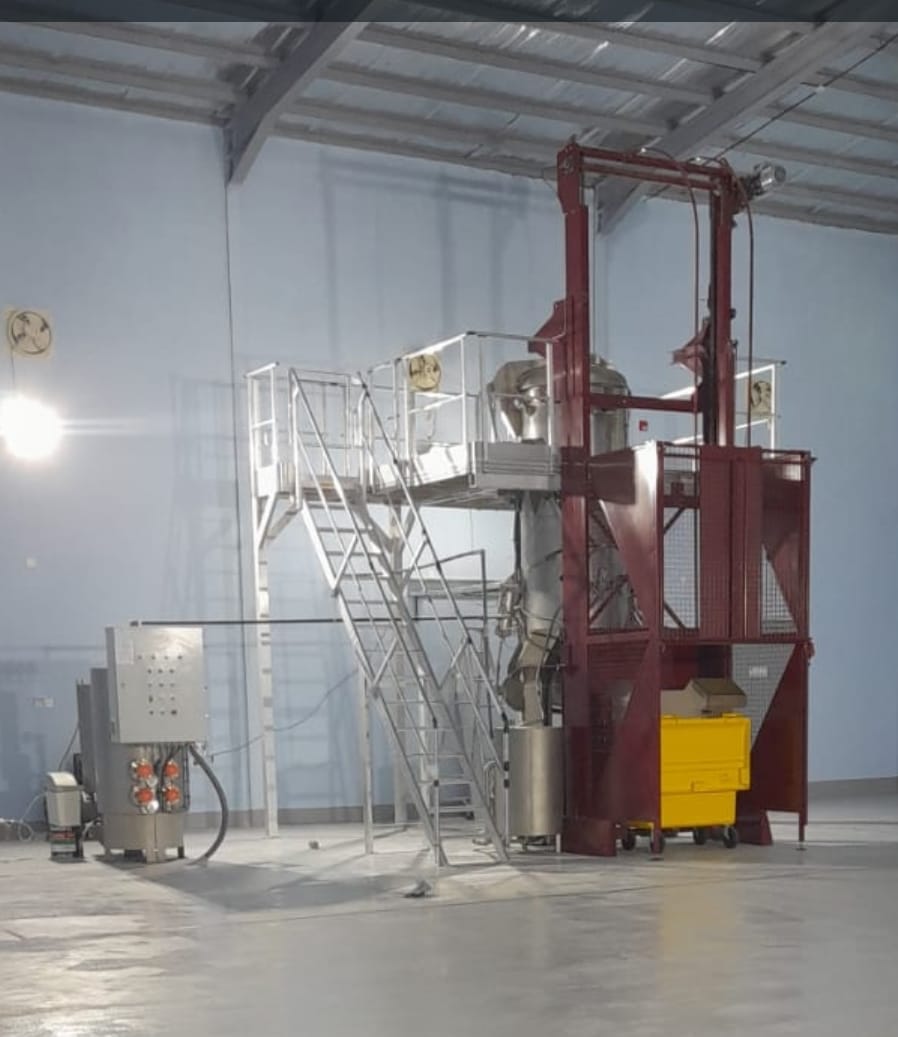
ECODAS T1000 Additional information about this model of machine.
Frequently asked questions
Find the answers here to the main questions about treating clinical and infectious waste and about Ecodas solutions.
How is clinical waste treated?
The Ecodas process combines shredding and steam sterilisation within a single sealed chamber. After shredding, waste is brought to 138°C at 3.5 bar, with a 10-minute sterilisation hold.
Treatment removes the infectious risk and turns the waste into sterilised, shredded material that can join a household waste stream or a recovery route.
How is infectious waste treated?
Infectious waste must be treated to remove the biological or infectious risk before disposal or recovery.
Ecodas solutions treat solid or liquid infectious waste, in particular through shredding and steam sterilisation.
The process is automated, uses no chemicals, involves no combustion and produces no polluting atmospheric emissions.
What is the difference between clinical, medical and infectious waste?
Medical waste is the broader umbrella term for waste produced through care, diagnostic, treatment or laboratory activity. Within it, clinical waste specifically refers to waste from healthcare activity that carries an infectious risk, while infectious waste is a still broader concept that can also apply to waste generated in laboratories, food processing activities or other professional settings.
Can clinical and infectious waste be treated on site?
Yes. Ecodas equipment can be installed directly at the site producing the waste, in particular healthcare facilities, laboratories or other producing sites, but also at specialist treatment centres.
On-site treatment limits the storage and transport of infectious waste, giving the facility greater control over the organisation and cost of its waste management.
TYPE OF WASTE TREATMENT


 28, rue Sébastopol 59100 Roubaix – France
 +33 3 20 70 98 65
 +33 3 20 36 28 05
 contact@ecodas.com